The sky is no longer the limit. Stay informed on the rapid progression of electric aviation, commercial drones, eVTOL (electric vertical takeoff and landing) aircraft, and the airborne mobility concepts shaping tomorrow’s airspace.
The aviation industry is on the cusp of its “Tesla moment.” As the global drive to decarbonise intensifies, the focus has shifted upward. Electric flight is no longer a laboratory experiment; it is a rapidly maturing sector that promises to make air travel quieter, cheaper, and more accessible. At E-Powered Future, we track the journey from small-scale drones to the electric vertical takeoff and landing (eVTOL) aircraft that will soon define our urban skylines.
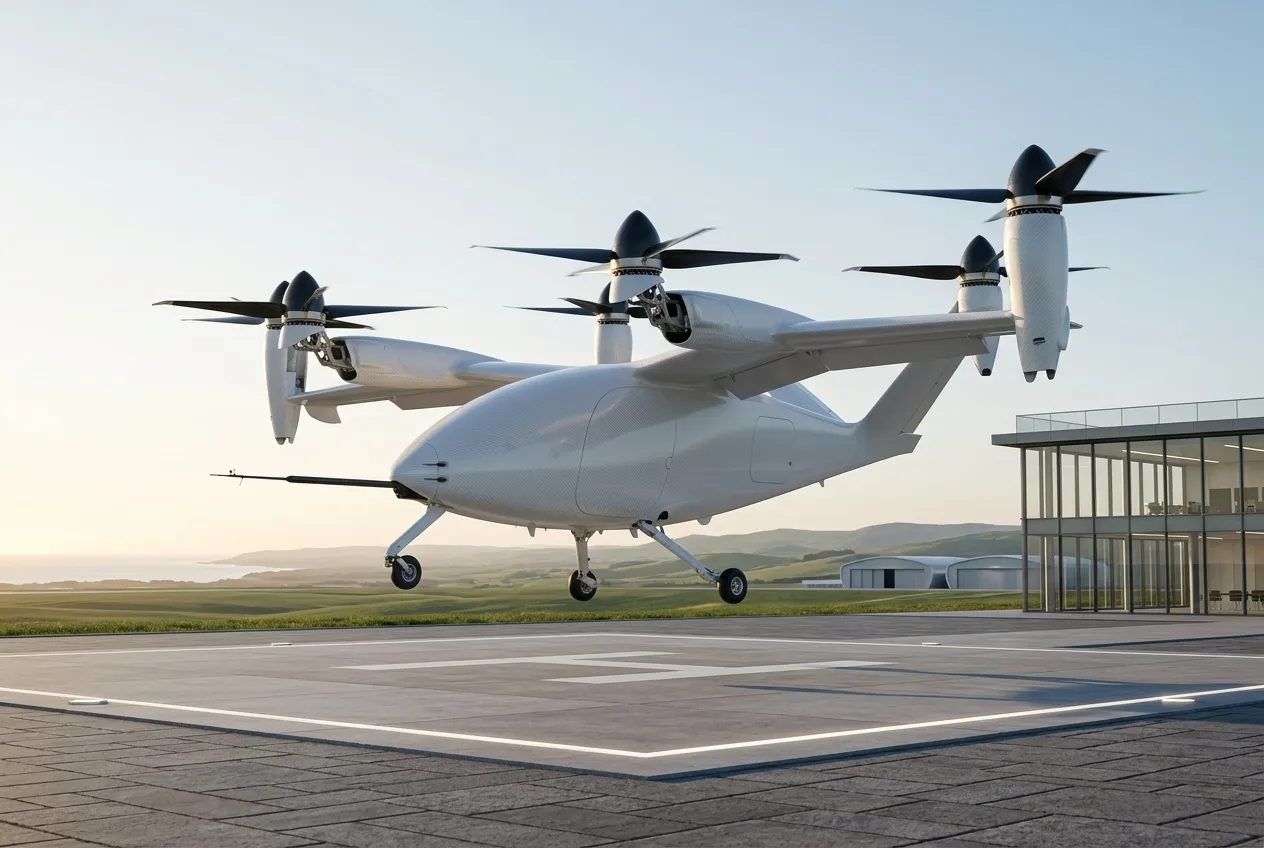
The concept of “flying taxis” is often dismissed as science fiction, but the reality is that dozens of companies are currently in the advanced stages of flight certification. eVTOL aircraft combine the hover capability of a helicopter with the efficient forward flight of an aeroplane, all powered by distributed electric propulsion. This redundancy—having multiple small rotors rather than one large one—makes them significantly safer and quieter. We explore how these vehicles will integrate into Australian cities, utilizing “vertiports” on existing buildings to bypass ground-level traffic.
While long-haul electric flight remains a challenge due to current battery energy densities, short-haul regional flight is ripe for disruption. In Australia, many regional routes are under 500 kilometres—the perfect distance for the current generation of electric aircraft. We analyse the trend of “retrofitting” existing airframes, like the Cessna Caravan, with electric motors. This approach lowers the barrier to entry, allowing regional airlines to reduce operating costs by up to 40% while providing a quieter experience for passengers and ground residents alike.
Beyond carrying people, powered aerial technology is redefining the movement of goods. Commercial drones are already being trialled for the delivery of medical supplies and urgent parcels in regional Australia. The innovation here is found in the “autonomy stack”—the software that allows a drone to navigate complex environments, avoid obstacles, and land safely in a backyard. We look at the regulatory and technical hurdles that must be cleared to turn our skies into a high-speed logistics network.