
For more than a century, vehicle safety has relied primarily upon mechanical engineering, driver skill, and gradual improvements in automotive design. Seatbelts, airbags, crumple zones, anti-lock braking systems, and traction control all dramatically improved road safety over time.
Today, however, the automotive industry is entering an entirely new era. Artificial intelligence is now becoming one of the most important technologies ever introduced into vehicle safety systems.
Modern vehicles are evolving rapidly from purely mechanical machines into intelligent transport platforms capable of:
- Monitoring surroundings
- Predicting hazards
- Assisting drivers
- Preventing collisions
- Analysing road conditions
- Responding faster than humans
Around the world, automotive manufacturers, AI developers, governments, and technology companies are investing billions of dollars into intelligent safety systems designed to dramatically reduce road accidents and improve transport safety. This transformation may eventually become one of the biggest advances in road safety history.
Why Road Safety Still Matters So Much
Despite decades of safety improvements, road accidents remain one of the leading causes of injury and death worldwide. Human error continues to play a major role in many accidents involving:
- Distraction
- Fatigue
- Speeding
- Impaired driving
- Delayed reactions
- Poor decision-making
Traditional safety systems are primarily reactive. They help protect occupants during or after accidents occur. Artificial intelligence introduces a completely different approach. AI safety systems aim to:
- Predict hazards
- Avoid collisions
- Monitor risk continuously
- Intervene before accidents happen
This proactive capability has the potential to dramatically improve road safety across the world.
What Exactly Is AI Vehicle Safety Technology?
AI vehicle safety systems combine:
- Sensors
- Cameras
- Radar
- LiDAR
- Machine learning
- Predictive analytics
- Real-time computing
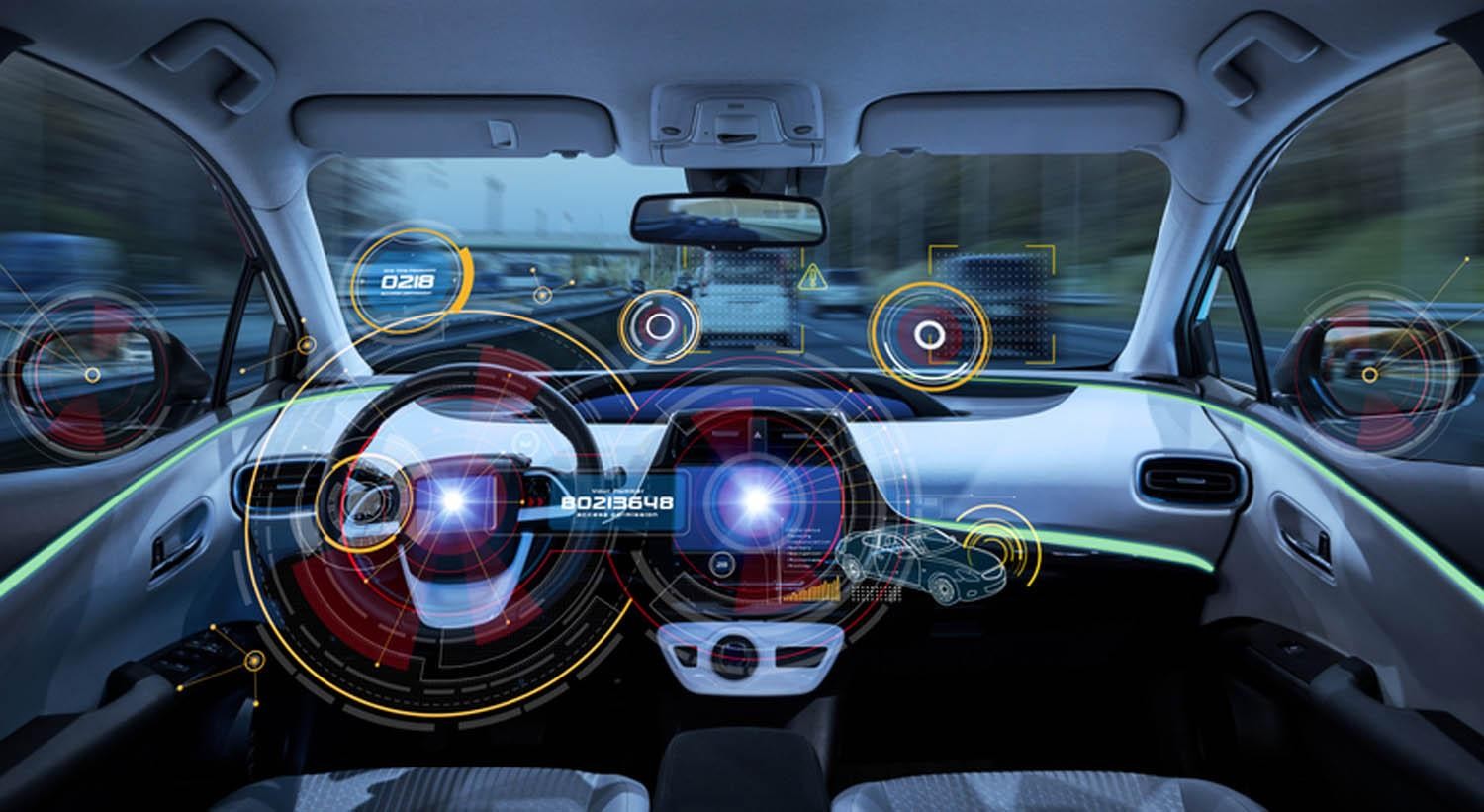
These technologies continuously analyse the vehicle’s environment and make rapid safety decisions. Modern AI systems can already detect pedestrians, identify cyclists, recognise vehicles, monitor lane positioning, interpret traffic signs, assess driver behaviour, and predict collision risks.
Advanced systems process enormous amounts of data within fractions of a second. This allows vehicles to react much faster than human drivers under many circumstances.
Advanced Driver Assistance Systems
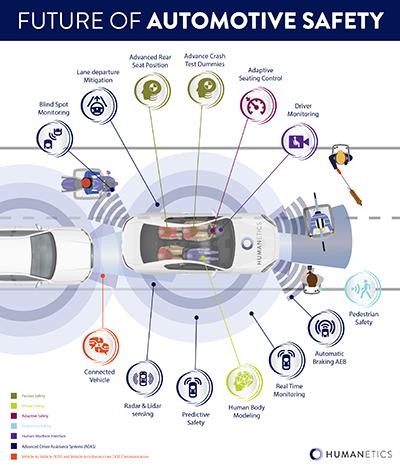
Many AI safety technologies are already appearing in modern vehicles through advanced driver assistance systems (ADAS). These systems include:
- Automatic emergency braking
- Lane-keeping assistance
- Adaptive cruise control
- Blind-spot monitoring
- Traffic sign recognition
- Collision avoidance systems
- Driver fatigue monitoring
- Pedestrian detection
Although not fully autonomous, these technologies significantly improve driving safety. Many accidents can already be prevented through AI-assisted intervention.
Automatic Emergency Braking
Automatic emergency braking is becoming one of the most important AI-driven safety systems. Using cameras, radar, and AI analysis, vehicles can detect imminent collision risks and automatically apply braking if drivers fail to respond.
This technology may help reduce:
- Rear-end collisions
- Pedestrian accidents
- Low-speed impacts
- Distracted driving incidents
Studies already suggest automatic emergency braking systems are significantly reducing certain accident types. As AI continues improving, these systems are becoming increasingly accurate and reliable.
Driver Monitoring Systems
Driver fatigue and distraction remain major contributors to road accidents. Modern AI systems can now monitor driver behaviour using:
- Cameras
- Facial recognition
- Eye movement analysis
- Steering behaviour
- Reaction patterns
Vehicles may detect drowsiness, distraction, medical emergencies, or impaired driving behaviour. Some systems can provide warnings, alerts, steering correction, or emergency intervention. Future AI monitoring systems may become even more advanced.
Predictive Collision Avoidance
One of the most impressive aspects of AI safety technology is predictive capability. Traditional vehicles primarily react after hazards appear. AI systems can predict potential dangers before accidents occur. For example, AI may identify:
- Sudden lane changes
- Dangerous braking behaviour
- Approaching pedestrians
- Unstable vehicles
- Hazardous intersections
This predictive capability allows vehicles to respond proactively rather than reactively. Future systems may become increasingly sophisticated as machine learning improves.
AI and Autonomous Safety Systems
Artificial intelligence also forms the foundation of autonomous driving systems. Self-driving vehicles depend heavily upon AI for navigation, hazard recognition, decision-making, traffic interpretation, and emergency response.
Autonomous systems continuously analyse enormous amounts of environmental data. AI helps vehicles:
- Interpret surroundings
- Maintain safe distances
- Respond to changing conditions
- Avoid hazards
- Coordinate movement
While full autonomy still faces challenges, AI safety systems are already significantly improving vehicle intelligence.
Vehicle-to-Vehicle Communication
Future safety systems may increasingly involve communication between vehicles themselves. Vehicle-to-vehicle (V2V) systems allow cars to share information involving:
- Speed
- Braking
- Traffic conditions
- Hazards
- Congestion
- Accidents
This creates a highly connected transport environment where vehicles may react to dangers beyond direct line-of-sight visibility. For example, sudden braking ahead, hidden accidents, or dangerous road conditions may be communicated instantly throughout connected transport networks, dramatically improving accident prevention.
Vehicle-to-Infrastructure Communication
Future AI safety systems may also connect directly with infrastructure. Vehicles may communicate with traffic lights, intersections, smart roads, emergency systems, and weather monitoring networks.
This infrastructure integration may improve traffic flow, hazard awareness, emergency response, and collision prevention. Smart cities and connected infrastructure are likely to play major roles within future transport safety ecosystems.
AI and Weather Hazard Detection
Weather conditions create significant safety risks. AI systems are becoming increasingly capable of monitoring rain, fog, ice, flooding, poor visibility, and road surface conditions.
Future vehicles may automatically adapt speed, braking sensitivity, traction systems, and route planning based upon environmental conditions. This could significantly improve safety during hazardous weather events.
How AI Learns and Improves
Machine learning allows AI systems to improve continuously over time. By analysing enormous volumes of driving data, AI can recognise patterns, improve hazard detection, refine decision-making, and adapt to new situations. Every kilometre driven contributes additional learning opportunities, meaning future AI safety systems may become progressively more intelligent and capable. The scale of global driving data available today is unprecedented.
Cybersecurity Challenges
As vehicles become increasingly connected and software-driven, cybersecurity becomes critically important. Future AI systems must protect against:
- Hacking
- System manipulation
- Data breaches
- Malicious interference
Vehicle cybersecurity is now becoming a major focus for automotive manufacturers and governments. Protecting intelligent transport systems may become one of the most important safety priorities of future mobility.
Could AI Eventually Eliminate Most Road Accidents?
Some experts believe AI-driven transport systems could eventually reduce road accidents dramatically. Because AI systems do not become tired, do not become distracted, do not drive impaired, react extremely quickly, and continuously monitor surroundings, future accident rates may eventually decline substantially.
However, achieving this goal still requires:
- Infrastructure improvements
- Regulatory development
- Public trust
- System reliability
- Extensive testing
While fully eliminating accidents may not be possible, AI may still become one of the biggest safety improvements ever introduced into transport.
Commercial Transport and Fleet Safety
Commercial fleets are also adopting AI safety systems rapidly. Freight operators place enormous importance upon accident reduction, driver safety, insurance costs, and operational reliability.
AI systems can help monitor driver fatigue, unsafe behaviour, collision risks, route conditions, and maintenance issues, significantly improving safety within logistics and freight sectors.
Insurance and Economic Impacts
AI-driven safety systems may also reshape insurance industries. Safer vehicles could potentially reduce accident claims, repair costs, injury expenses, and legal disputes. Insurance models themselves may eventually change as AI systems reduce risk profiles.
At the same time, advanced AI safety features may increasingly influence vehicle purchasing decisions.
Australia and New Zealand’s Future Opportunities
Australia and New Zealand may benefit significantly from future AI safety systems. The region faces several transport challenges involving long-distance travel, regional roads, wildlife hazards, and varied weather conditions.
Advanced AI systems may improve safety across highways, freight routes, tourism regions, and urban environments. As connected infrastructure expands, future mobility systems may become increasingly intelligent across the region.
The Future of Intelligent Vehicle Safety
Vehicle safety is rapidly evolving from passive protection towards active intelligence. Future transport systems may involve AI-controlled collision prevention, autonomous emergency response, predictive hazard analysis, connected vehicle ecosystems, and smart infrastructure integration.
Vehicles themselves are becoming increasingly capable of thinking, analysing, learning, and responding. Artificial intelligence may ultimately become one of the most important technologies ever introduced into transport safety.
The future of mobility is not simply about faster vehicles or cleaner energy. It is increasingly about creating transport systems that are dramatically safer, smarter, and more capable of protecting human life. The AI safety revolution has already begun.