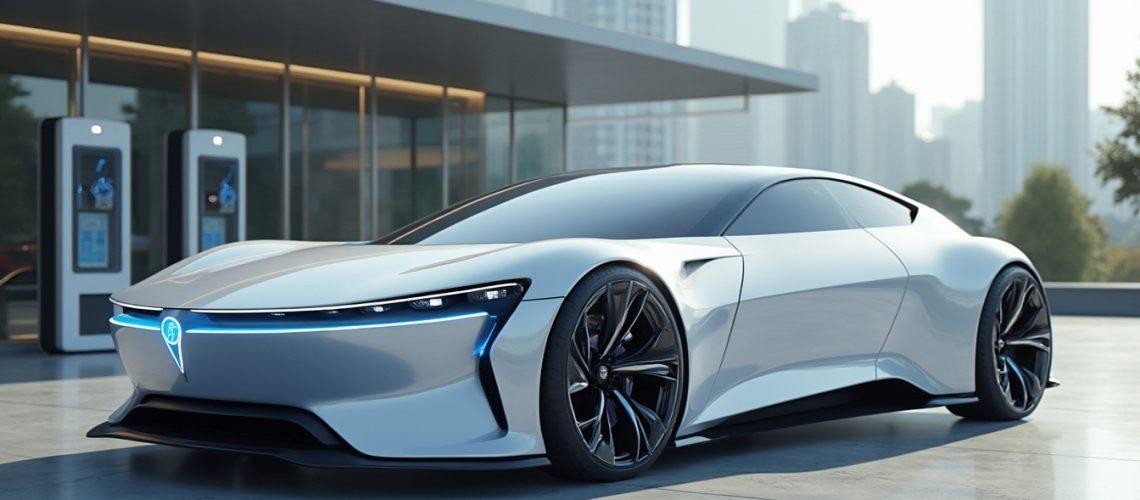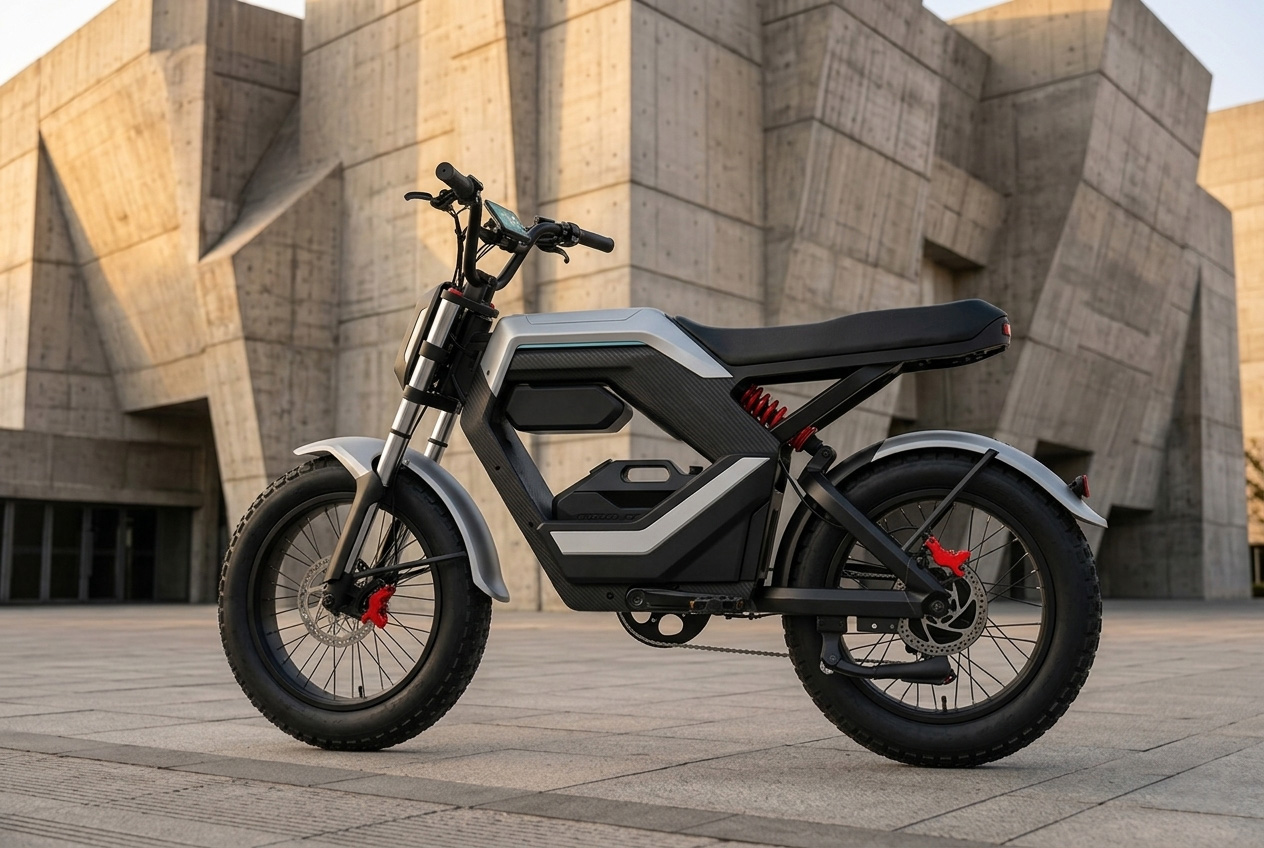


The future of electric mobility is not being shaped only by batteries, artificial intelligence, and autonomous driving systems. Another equally important revolution is taking place behind the scenes — the development of advanced lightweight electric vehicle materials and futuristic vehicle design technologies that may dramatically improve efficiency, performance, safety, and sustainability across the transport industry.
As electric vehicles continue evolving rapidly, manufacturers worldwide are searching for ways to:
- Increase driving range
- Improve efficiency
- Reduce weight
- Enhance performance
- Lower energy consumption
- Improve structural safety
One of the most effective ways to achieve these goals is through advanced lightweight engineering.
Around the world, automotive companies, aerospace firms, technology developers, and material science researchers are investing billions of dollars into:
- Carbon fibre composites
- Advanced aluminium systems
- Graphene research
- Magnesium alloys
- Lightweight battery enclosures
- Next-generation structural engineering
These innovations may fundamentally reshape how future electric vehicles are built. The result could be vehicles that are lighter, faster, safer, stronger, more energy efficient, and more environmentally sustainable. The future of mobility may depend just as much upon advanced materials as it does upon software and batteries.
Why Vehicle Weight Matters So Much
Vehicle weight directly influences nearly every aspect of transport performance. Heavier vehicles generally require more energy, larger batteries, stronger suspension systems, and greater braking force.
Reducing weight can dramatically improve:
- Driving range
- Acceleration
- Handling
- Efficiency
- Braking performance
- Battery optimisation
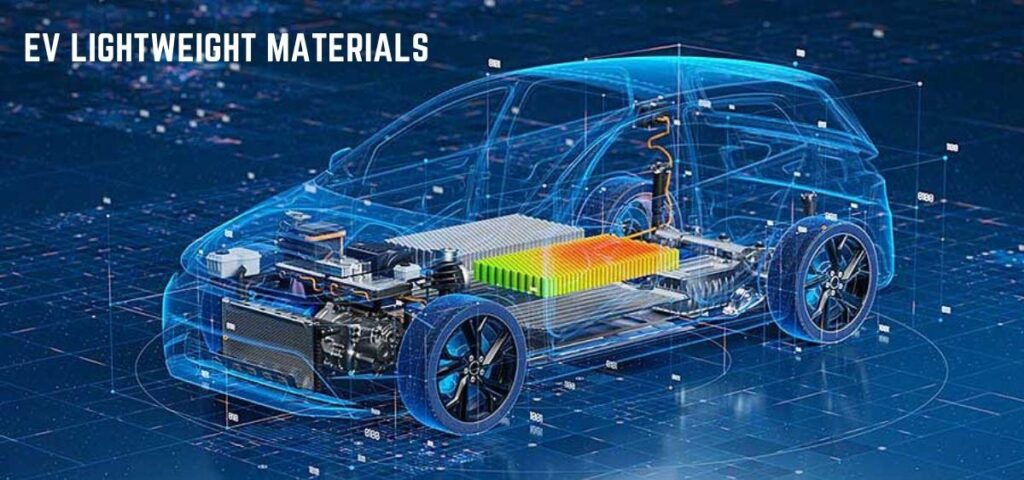
For electric vehicles, lightweight design becomes particularly important because batteries themselves remain relatively heavy. Manufacturers therefore face a major engineering challenge: increasing battery capacity while simultaneously reducing overall vehicle weight. Advanced materials are helping solve this problem.
The Rise of Carbon Fibre Composites
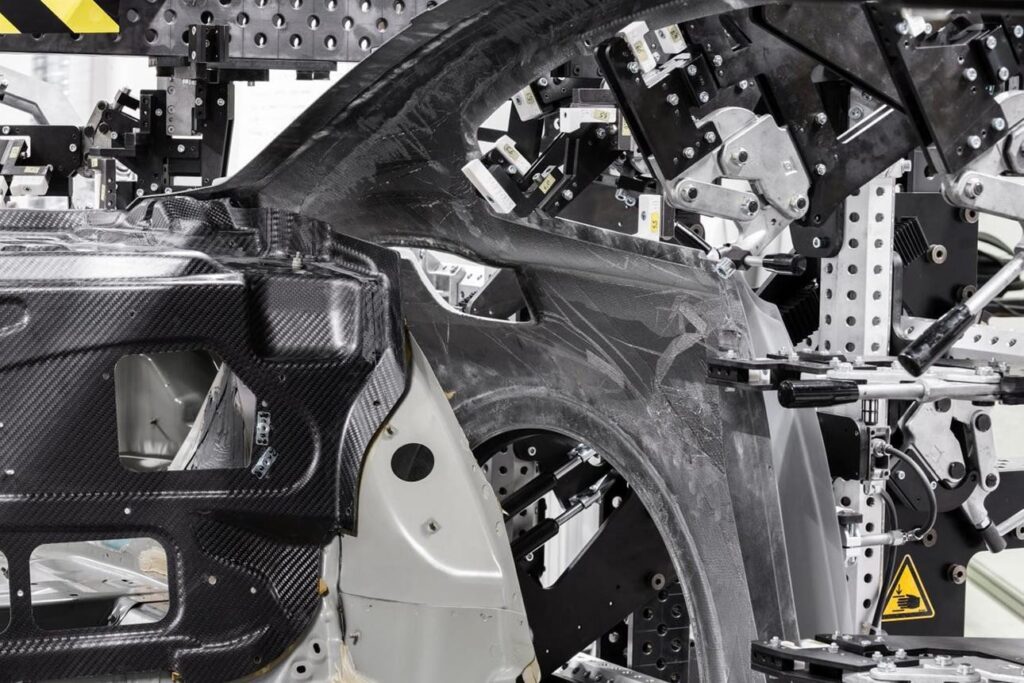
Carbon fibre has become one of the most important advanced materials within high-performance engineering. Originally used heavily within aerospace, motorsport, and military applications, carbon fibre is now increasingly appearing in electric vehicles.
Carbon fibre offers several major advantages:
- Extremely lightweight
- Exceptional strength
- High rigidity
- Corrosion resistance
- Aerodynamic flexibility
Compared with traditional steel, carbon fibre can dramatically reduce structural weight while maintaining excellent strength characteristics. This allows manufacturers to improve efficiency, reduce battery demands, enhance performance, and improve handling. High-performance EV manufacturers are already heavily incorporating carbon fibre technology into vehicle structures.
Advanced Aluminium Engineering
Aluminium is also becoming increasingly important within future mobility. Modern aluminium alloys offer low weight, excellent strength, corrosion resistance, recyclability, and manufacturing flexibility.
Many electric vehicle platforms now use extensive aluminium construction for:
- Chassis systems
- Body panels
- Suspension components
- Battery enclosures
Aluminium can significantly reduce vehicle mass compared with traditional steel designs. This improves energy efficiency, acceleration, range, and braking response. As manufacturing techniques improve, aluminium may become even more widely adopted across future transport sectors.
Graphene and Future Material Science
Graphene represents one of the most exciting future material technologies currently under development. This ultra-thin carbon-based material offers extraordinary characteristics involving strength, conductivity, flexibility, thermal management, and low weight.
Researchers are exploring graphene applications involving:
- Batteries
- Structural reinforcement
- Thermal systems
- Conductive materials
- Lightweight composites
Although still developing commercially, graphene may eventually become one of the most transformative materials within future mobility engineering. Its potential applications extend far beyond automotive sectors into aerospace, marine systems, robotics, electronics, and renewable energy systems.
Lightweight Batteries and Structural Integration
Battery systems themselves are also evolving structurally. Future electric vehicles may increasingly integrate batteries directly into vehicle architecture. Instead of functioning simply as separate heavy components, batteries may become structural elements, load-bearing systems, and integrated chassis platforms. This concept is sometimes referred to as structural battery design.
Potential advantages include:
- Lower overall weight
- Improved rigidity
- Greater space efficiency
- Better aerodynamics
- Reduced manufacturing complexity
As battery engineering improves, future EV platforms may become dramatically more efficient.
Aerodynamics and Future Vehicle Shapes
Lightweight materials also allow manufacturers to experiment with increasingly advanced aerodynamic designs. Aerodynamics plays a major role in electric vehicle efficiency. Reducing drag improves driving range, energy consumption, high-speed stability, and battery efficiency.
Future electric vehicles are increasingly featuring:
- Smoother surfaces
- Enclosed wheel designs
- Active aerodynamic systems
- Ultra-streamlined body shapes
- Low-drag architecture
Advanced materials make these designs easier to manufacture while maintaining structural integrity. The result may be vehicles that look dramatically different from traditional cars.
Why Lightweight Design Matters for Performance Vehicles
Performance vehicles benefit enormously from reduced weight. Lower mass improves acceleration, handling, cornering, braking, and responsiveness. Electric drivetrains already provide instant torque, rapid acceleration, and smooth power delivery. When combined with lightweight engineering, the performance potential becomes extraordinary.
Future high-performance EVs may achieve remarkable capabilities while remaining highly efficient. This is one reason lightweight engineering is becoming so important within sports cars, electric motorcycles, electric marine systems, and aerial mobility platforms.
The Influence of Aerospace Engineering
Many future vehicle materials are heavily influenced by aerospace technology. Aircraft engineering has long prioritised low weight, high strength, energy efficiency, and structural durability. As electric mobility advances, automotive engineering is increasingly borrowing concepts from aviation, Formula One, defence industries, and advanced manufacturing sectors.
This cross-industry innovation is accelerating material development rapidly. The future of mobility may increasingly resemble aerospace engineering rather than traditional automotive manufacturing.
Sustainability and Recyclability
Future material development is also strongly influenced by sustainability goals. Manufacturers are increasingly focusing upon recyclability, renewable materials, lower manufacturing emissions, and sustainable production methods.
Advanced lightweight materials may help reduce:
- Energy consumption
- Resource demand
- Operating emissions
- Transport inefficiencies
Some future materials may also involve bio-based composites, recycled carbon fibre, sustainable polymers, or renewable structural materials. Environmental considerations are becoming central to future engineering design.
AI and Advanced Manufacturing
Artificial intelligence is also transforming material engineering and manufacturing systems. AI can help optimise structural design, stress analysis, material efficiency, manufacturing precision, and aerodynamic performance.
Advanced manufacturing techniques such as:
- Robotic assembly
- 3D printing
- Automated composites production
- Digital twin simulation
are accelerating innovation significantly. Future vehicles may increasingly be designed using AI-assisted engineering systems capable of identifying highly optimised lightweight structures.
Electric Aviation and Lightweight Materials
Future electric aviation depends heavily upon lightweight engineering. Electric aircraft require maximum efficiency, reduced mass, and strong structural integrity. Advanced materials such as carbon composites, lightweight alloys, and graphene systems may become essential for future aerial mobility systems.
Without lightweight engineering, many future electric aviation concepts may not become commercially practical. This demonstrates how important material science is becoming across multiple future mobility sectors.
Marine Applications and Future Watercraft
Advanced lightweight materials are also transforming marine transport systems. Electric marine vehicles benefit significantly from reduced hull weight, improved hydrodynamics, lower energy consumption, and increased performance.
Future electric watercraft may increasingly incorporate:
- Carbon fibre structures
- Lightweight aluminium systems
- Advanced composites
- AI-optimised hull designs
Lightweight marine engineering may become one of the key factors driving future electric boating innovation.
More details on marine applications: watersportinnovations.com.au
Challenges Still Facing Advanced Materials
Despite enormous advantages, advanced lightweight materials still face several challenges. These include manufacturing costs, repair complexity, production scalability, recycling difficulties, and supply chain limitations.
Carbon fibre, for example, remains more expensive than traditional steel manufacturing. However, as production scales increase and technology improves, costs are gradually declining. Many analysts believe advanced lightweight materials will become increasingly mainstream over the next decade.
The Future of Vehicle Manufacturing
Future mobility manufacturing may look dramatically different from traditional automotive production. Factories may increasingly use robotic assembly, AI-managed production, digital twin simulation, automated composites manufacturing, and modular vehicle architecture.
Material science itself may become one of the biggest competitive battlegrounds within future transport industries. The companies that successfully combine lightweight engineering, battery efficiency, AI integration, and advanced manufacturing may gain major advantages within the future mobility sector.
Australia and New Zealand’s Potential Opportunities
Australia and New Zealand may also benefit from future lightweight engineering developments. The region already possesses advanced mining industries, aluminium production capability, growing renewable energy sectors, and advanced engineering expertise.
Future opportunities may emerge involving advanced manufacturing, marine systems, aerospace technology, and electric mobility infrastructure. As future mobility expands globally, lightweight engineering may become increasingly important across multiple industries.
The Future of Lightweight Electric Mobility
The future of electric transport is about far more than simply replacing petrol engines with batteries. It involves a complete rethinking of vehicle design, engineering, materials, aerodynamics, manufacturing, and energy efficiency. Advanced lightweight materials may become one of the most important technologies shaping future mobility.
Future vehicles are likely to become lighter, smarter, stronger, more efficient, and increasingly sustainable. The convergence of material science, AI, advanced manufacturing, electrification, and autonomous systems is creating one of the most exciting engineering revolutions in modern history.
The transport systems of the future may ultimately owe as much to advanced materials as they do to software and batteries. That transformation is already underway.