
For more than half a century, electric flying cars have represented one of the ultimate symbols of the future. Once considered fantasy technology reserved for futuristic films and science fiction novels, electric flying vehicles are now rapidly moving from concept to reality.
Around the world, governments, aerospace companies, automotive manufacturers, technology firms, and venture capital investors are pouring billions of dollars into what is becoming one of the most exciting sectors in future mobility — electric vertical take-off and landing aircraft, commonly known as eVTOLs.
These advanced electric aircraft are being designed to:
- Transport passengers
- Reduce urban congestion
- Improve regional mobility
- Create air taxi services
- Transform logistics
- Revolutionise short-distance transport
The global race to dominate the future aerial mobility sector is accelerating rapidly. Major corporations now believe electric aerial transport could eventually become a multi-billion-dollar industry that fundamentally reshapes how people move around cities and regional areas.
While many challenges still remain, the speed of technological development suggests that electric flying vehicles may become commercially viable far sooner than most people once imagined.
What Exactly Is an eVTOL Aircraft?
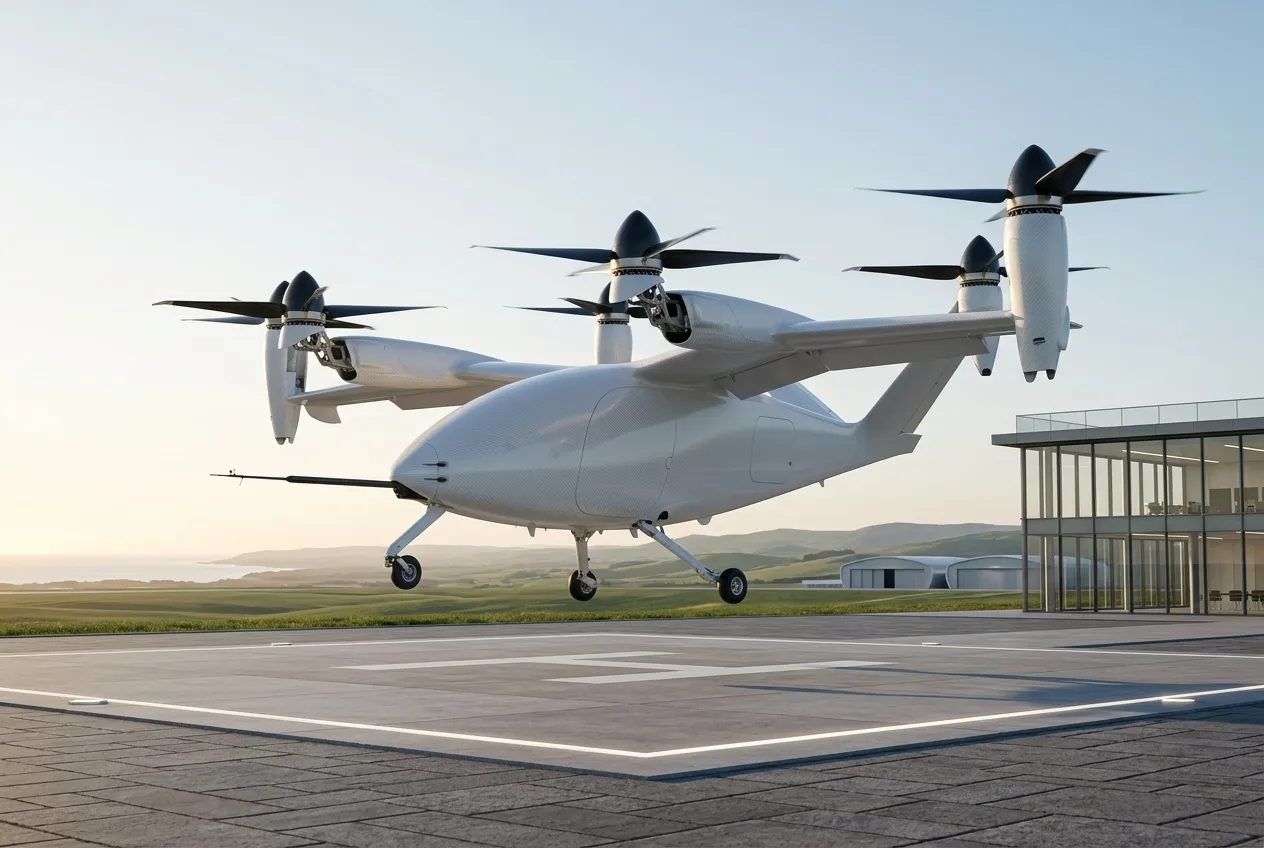
An eVTOL is an electric aircraft capable of vertical take-off and landing without requiring traditional runways. These aircraft typically combine:
- Electric propulsion systems
- Lightweight materials
- Advanced batteries
- AI-assisted flight systems
- Autonomous navigation technology
- Distributed rotor systems
Unlike conventional helicopters, many eVTOL designs use multiple smaller electric rotors rather than a single large rotor. This creates several potential advantages:
- Quieter operation
- Improved efficiency
- Lower maintenance
- Enhanced safety redundancy
- Reduced emissions
Many future eVTOL systems are also being designed for autonomous operation, urban air taxi services, regional transport, emergency response, tourism applications, and freight logistics. The sector is evolving rapidly as technology improves.
Why Electric Aviation Is Attracting So Much Investment
Electric aerial mobility has attracted enormous global investment because it addresses several growing urban transport challenges. Many cities around the world now face severe congestion, infrastructure limitations, population growth, longer commuting times, and transport inefficiencies.
Future aerial mobility systems may eventually help reduce pressure on overloaded road networks. Electric flying vehicles may also offer faster regional travel, reduced urban congestion, lower operating emissions, improved accessibility, and flexible transport solutions.
For investors, the long-term commercial opportunity is enormous. Some analysts believe urban air mobility could become one of the most important future transport industries over the next two decades.
Which Companies Are Leading the Global Race?
A large number of companies are now aggressively competing within the eVTOL sector. Some of the major players include Joby Aviation, Archer Aviation, Lilium, Vertical Aerospace, EHang, Volocopter, Beta Technologies, Wisk Aero, Hyundai Supernal, and various Boeing-backed ventures.
Many of these companies are already conducting flight testing, certification programs, prototype demonstrations, infrastructure planning, and commercial partnership development. Some are targeting limited commercial operations within only a few years. Competition is becoming increasingly intense.
Joby Aviation and the Push Towards Commercial Air Taxis
Joby Aviation has emerged as one of the most recognised names in the global eVTOL industry. The company is developing electric aircraft designed specifically for short-distance passenger transport. Its aircraft aims to provide high-speed regional mobility, low-noise operation, vertical take-off capability, and reduced operating costs.
Joby has already conducted extensive testing programs and secured major investment backing. The company’s long-term goal involves creating scalable urban air taxi networks integrated into existing transport systems.
Archer Aviation and Urban Mobility Networks
Archer Aviation is another major player pursuing the future air taxi market. The company is focusing heavily upon urban mobility, commercial scalability, and passenger transport efficiency. Archer’s aircraft designs target short urban routes, rapid passenger movement, and high-frequency operations. The company has also partnered with major aviation and automotive organisations to accelerate development and certification.
Lilium and Regional Electric Flight
Germany-based Lilium is pursuing a slightly different strategy. Instead of focusing only upon short urban flights, Lilium is targeting regional mobility, intercity aerial transport, and longer-range electric flight. Its aircraft designs use multiple electric jet systems intended to provide higher cruising speeds, extended operating range, and premium passenger experiences. If successful, this could significantly expand the potential market for electric aerial transport.
China’s Rapid Progress in Autonomous Aerial Mobility
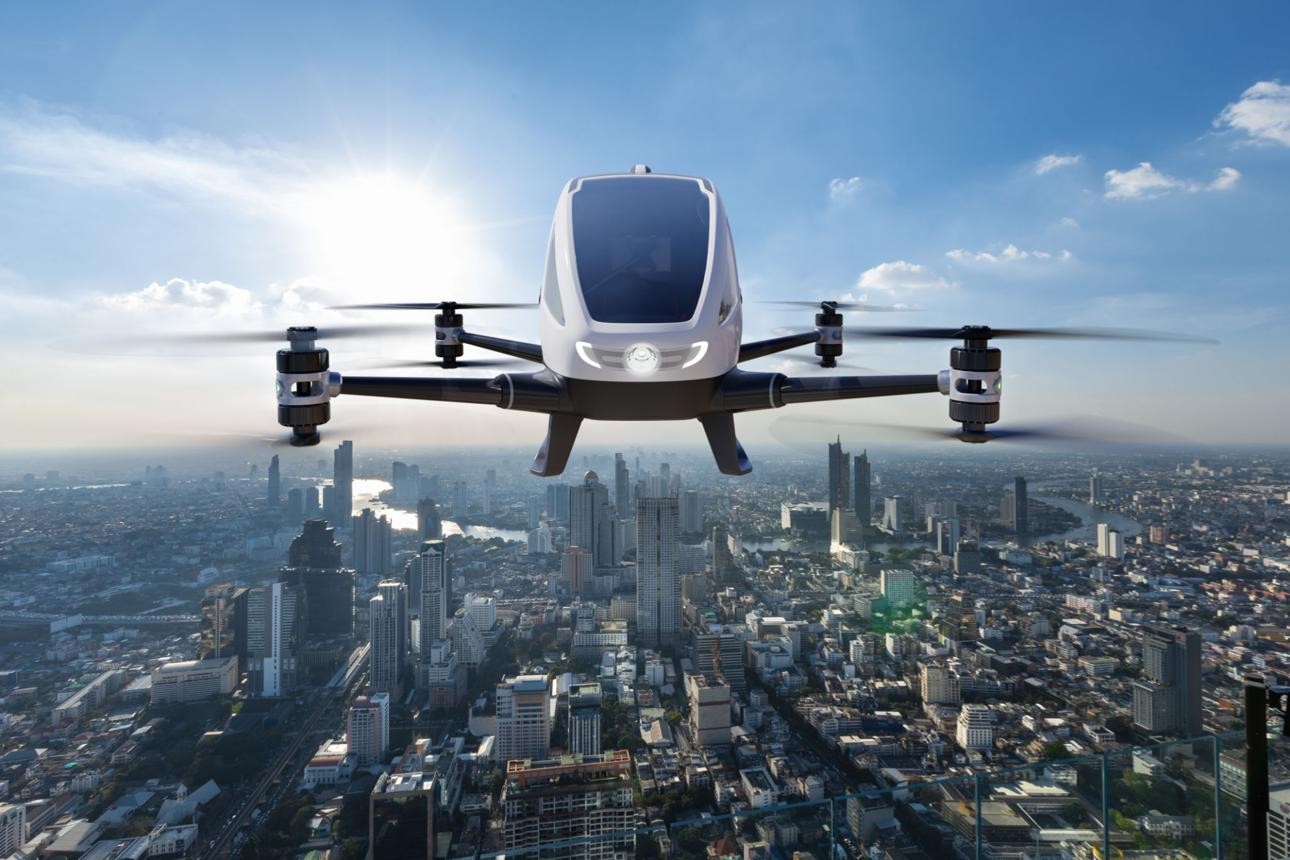
China is also investing heavily into autonomous electric aviation. Companies such as EHang are developing highly automated passenger drone systems capable of autonomous flight operations. China’s aggressive investment in AI, electrification, smart infrastructure, and autonomous systems may allow the country to become a major global leader within future aerial mobility. The speed of development across Asia is accelerating rapidly.
Why Battery Technology Is So Important
Battery technology remains one of the biggest factors influencing future electric aviation. Aircraft require high energy density, low weight, strong reliability, and rapid charging capability.
Current lithium-ion systems are improving steadily, but battery limitations still restrict flight range, passenger capacity, and payload capability. Future battery developments such as solid-state batteries, advanced thermal management, lightweight materials, and ultra-fast charging systems could dramatically improve electric aviation practicality. Battery innovation may ultimately determine how quickly the eVTOL sector expands commercially.
AI and Autonomous Flight Systems
Artificial intelligence is becoming increasingly important within future aerial mobility. Many eVTOL systems are being designed with AI-assisted navigation, autonomous flight capability, collision avoidance systems, predictive route optimisation, and intelligent traffic management.
Future urban air mobility networks may eventually involve autonomous flight coordination, AI-controlled traffic systems, connected aerial corridors, and smart landing infrastructure. AI may become essential for safely managing large-scale urban aerial transport systems.
Infrastructure Challenges Still Remain
While eVTOL technology is progressing rapidly, infrastructure development remains a major challenge. Future aerial mobility systems will require vertiports, charging infrastructure, air traffic integration, safety systems, regulatory frameworks, and maintenance networks.
Cities must determine where aircraft will land, how charging systems will operate, how noise will be managed, and how aerial traffic will be coordinated. Building this infrastructure will require substantial long-term investment.
Safety and Public Confidence
Public confidence remains one of the most important factors influencing future electric aviation. Passengers must trust aircraft reliability, autonomous systems, battery safety, emergency procedures, and AI flight systems.
The aviation industry already operates under extremely strict safety standards. Future eVTOL systems will likely face similarly rigorous certification requirements. Companies must demonstrate operational reliability, redundancy systems, emergency capability, cybersecurity protection, and weather performance before large-scale public adoption becomes possible.
Could Flying Cars Reduce Urban Congestion?
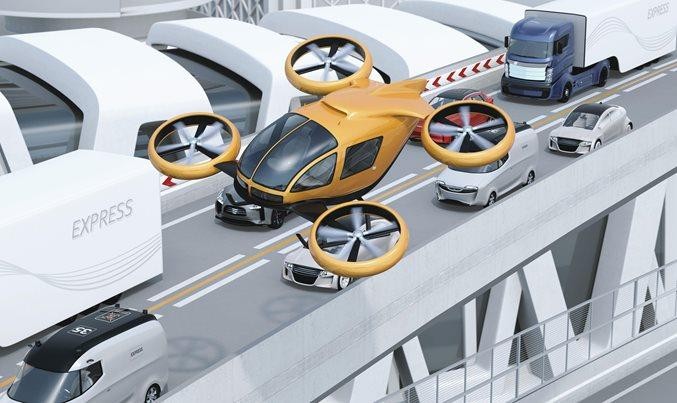
One of the major selling points of eVTOL systems is congestion reduction. Many cities now face severe traffic delays and overloaded transport infrastructure. Future aerial mobility may help reduce commuting times, improve regional connectivity, expand transport flexibility, and ease pressure on road systems.
However, flying cars are unlikely to replace traditional transport entirely. Instead, they may become part of broader smart mobility ecosystems, integrated transport systems, or premium urban mobility services. The technology is more likely to complement existing infrastructure rather than fully replace it.
The Role of Governments and Regulation
Government regulation will heavily influence the speed of commercial rollout. Authorities worldwide are currently developing safety frameworks, airspace regulations, autonomous flight standards, infrastructure requirements, and certification processes.
Countries that move quickly may become global leaders in aerial mobility, AI aviation systems, electric aircraft manufacturing, and smart transport infrastructure. Competition between nations is already intensifying.
Australia and New Zealand’s Potential Opportunities
Australia and New Zealand may eventually become important markets for future electric aviation. The region offers large regional travel distances, tourism demand, coastal transport opportunities, and remote access requirements.
Future eVTOL systems may become useful for tourism operations, regional connectivity, emergency response, coastal transport, and remote logistics. However, factors such as weather conditions, infrastructure development, and regulatory frameworks will influence adoption speed.
The Environmental Advantages of Electric Flight
Electric aviation may also provide important environmental benefits. Potential advantages include reduced emissions, quieter operation, lower fuel consumption, and improved urban sustainability.
As renewable energy systems expand globally, electric aviation may become increasingly attractive as part of broader sustainability strategies. Noise reduction is particularly important. Many eVTOL systems aim to operate far more quietly than traditional helicopters, which could improve public acceptance in urban environments.
The Future of Urban Air Mobility
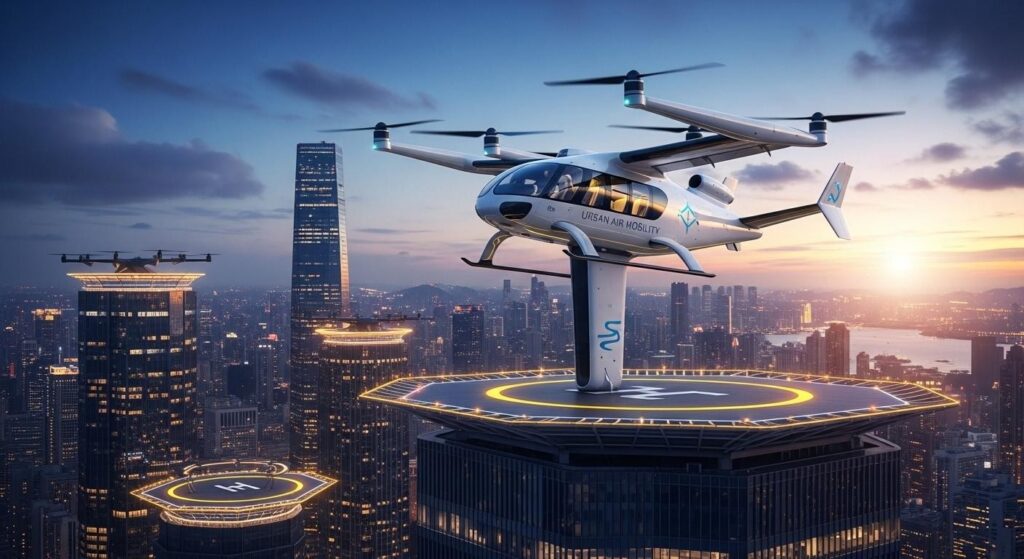
Urban air mobility may eventually become one of the defining technologies of future transport. Future cities may include autonomous aerial taxis, rooftop vertiports, AI-managed flight corridors, electric emergency aircraft, and integrated smart transport systems.
While widespread adoption may still take time, development is accelerating rapidly. The convergence of AI, electrification, lightweight materials, advanced batteries, and autonomous systems is creating extraordinary momentum within the sector.
Are Flying Cars Really Closer Than We Think?
The answer increasingly appears to be yes. Electric aerial mobility is no longer simply theoretical. Real aircraft are flying, being tested, receiving investment, progressing through certification, and attracting commercial partnerships.
Major global corporations are committing enormous resources to the industry because they believe future aerial mobility could become transformational.
The technology still faces major challenges involving infrastructure, regulation, battery performance, public trust, and operational scalability. However, the pace of innovation is accelerating remarkably quickly.
The future of transport is increasingly becoming electric, connected, autonomous, and multi-dimensional. And the skies above future cities may eventually become just as important as the roads below them.
See More at watersportinnovations.com.au